
The Kenya National Examinations Council (KNEC) has come out strongly to dismiss viral claims circulating on social media suggesting that it has no money for KNEC Contracted Professionals payments 2026.
The reports, which spread quickly online, alleged that the council had prioritised staff salaries and loan repayments over settling dues owed to teachers and other contracted personnel. The statement was falsely attributed to KNEC Chief Executive Officer David Njengere, claiming that the council had no funds left to pay those involved in administering national examinations.
However, KNEC has clarified that this statement is not only inaccurate but also misleading.
KNEC Clarifies Position on Delayed Payments
In its official response, KNEC acknowledged that there have been delays in paying examiners, invigilators, and other contracted professionals. However, it firmly denied that its CEO made the remarks being circulated online.
According to the council, the delays are due to financial constraints affecting the timely release of funds—not a lack of commitment to pay.
KNEC emphasized that it remains fully committed to honoring all contracts signed with individuals who participated in the administration and marking of the 2025 national examinations.
The council further advised the public to rely on official communication from the Ministry of Education rather than unverified social media posts.
Ministry of Education Weighs In
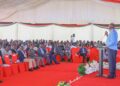
The Ministry of Education, led by Cabinet Secretary Julius Ogamba, has also addressed the matter, confirming that the delay in payments is linked to broader budgetary and cash flow challenges.
Speaking earlier in February, Ogamba described the concerns raised by teachers and examiners as valid, assuring them that the government is actively working to resolve the issue.
He revealed that the ministry is collaborating with the National Treasury to fast-track the release of funds and ensure that all affected personnel are paid.
“The delays in disbursement of allowances have arisen from budgetary and cash flow constraints currently affecting the release of funds. However, payment remains a top priority,” Ogamba stated.
READ ALSO: Teachers Threaten Nationwide Strike, Issues Demands
Thousands of Personnel Involved in 2025 Exams
The scale of Kenya’s national examinations highlights why the delayed payments have become such a major issue.
For the 2025 Kenya Certificate of Secondary Education (KCSE), KNEC contracted a large workforce to ensure the exams were conducted smoothly. These included:
- 54,782 invigilators
- 12,126 supervisors
- 10,765 centre managers
- 22,247 security officers
- 2,692 drivers for logistics support
In addition, nearly 45,000 teachers were engaged in the marking of examination papers across the country.
For the Kenya Primary School Education Assessment and Kenya Junior School Education Assessment, the numbers were even higher. KNEC enlisted:
- 125,492 invigilators
- 26,479 supervisors
- 24,213 centre managers
Security personnel for KPSEA and KJSEA were mainly deployed to escort examination materials and guard storage facilities in high-risk areas, unlike KCSE where each centre had at least two officers.
KNEC Contracted Professionals payments 2026
How Much Are Invigilators and Examiners Paid?
One of the key concerns among teachers has been the rate of payment for examination duties.
Although KNEC payment rates may vary slightly depending on the role and assignment, typical figures in recent years have been:
- Invigilators: Approximately KSh 1,000 – KSh 1,500 per day
- Supervisors: Around KSh 1,500 – KSh 2,000 per day
- Centre Managers: Estimated KSh 2,000 – KSh 3,000 per day
- Examiners (Markers): Paid per script, averaging KSh 40 – KSh 60 per paper depending on the subject
Examiners handling subjects with many candidates, such as Mathematics and English, can earn significantly more due to the volume of scripts marked.
In addition to these payments, KNEC often provides allowances to cover accommodation, meals, and transport—especially for teachers deployed far from their home stations.
However, delays in disbursing these funds have left many teachers struggling financially, with some unable to meet basic expenses after completing their assignments.
READ ALSO: File KRA Returns on WhatsApp – No More iTax Stress!
Budget Allocation and Financial Pressure
In the 2025/2026 financial year, the government allocated approximately KSh 702.7 billion to the education sector. Out of this, KSh 5.9 billion was specifically set aside for the administration of national examinations and assessments.
Despite this allocation, delays in releasing funds have affected KNEC’s ability to pay contracted personnel on time.
This has sparked frustration among teachers, many of whom rely on examination marking and invigilation as an additional source of income.
Teachers Express Frustration Over Delayed Pay
As of March 2026, many examiners and invigilators were still waiting for their payments, prompting widespread complaints both online and offline.
Some affected teachers have even suggested alternative payment arrangements, including installment-based payments.
One frustrated examiner remarked:
“It is now time we allow KNEC to pay us using a ‘lipa mdogo mdogo’ method. Walimu hawana fare ya kuenda nyumbani.”
Such sentiments reflect the growing financial strain among teachers who had expected timely compensation after completing their duties.
Government Appeals for Patience
Despite the delays, the government has reassured all affected personnel that payments will be made.
The Ministry of Education has urged teachers and other contracted staff to remain patient as efforts continue to resolve the funding bottlenecks.
Officials have also acknowledged the critical role played by teachers, security officers, and support staff in ensuring the credibility and smooth running of national examinations.
KNEC reiterated that it values the contribution of all personnel involved and is committed to improving payment timelines in future examination cycles.
READ ALSO: KUCCPS Opens Portal for KMTC Applications: How to Apply & Requirements
Conclusion
While the situation remains unresolved for many, there is optimism that the collaboration between the Ministry of Education and the National Treasury will lead to the release of funds.
Teachers and examiners are now keenly awaiting official updates and timelines for payment.
For now, KNEC maintains that all dues will be honoured and has urged stakeholders to ignore misleading information circulating on social media.
READ MORE:
- How TSC Teacher Transfers Work in Kenya (Step-by-Step Guide)
- Transition from Junior to Senior School In Kenya: What we Know So Far
- Government Scholarships Available for Kenyan Students
- Common KCSE & KJSEA Registration Mistakes Schools Should Avoid
- Best Courses in Kenyan Universities and TVET Colleges 2026
- Universities Fund Explains Scholarship Eligibility Ahead of KUCCPS 2026 Applications
- Digital Tools for Kenyan Teachers that Will Transform Your Classroom in 2026