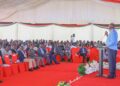

There is growing tension in the education sector after teachers warned they could go on a nationwide strike by the end of April if the government fails to fix ongoing issues with their medical cover and the persistent shortage of teachers. Teachers strike over SHA medical cover
Leaders from the Kenya Union of Post-Primary Education Teachers (KUPPET) in Bungoma County say the situation on the ground is becoming unbearable, especially after the transition to the new healthcare system under the Social Health Authority (SHA).
Frustration Over Limited Access to Healthcare
Speaking in Kabuchai Constituency on Friday, April 3, union officials expressed deep concern about the limited number of hospitals currently serving teachers under the new scheme.
According to KUPPET leaders, only a few facilities in the entire county are handling teachers’ medical cases — a situation that has left many struggling to access treatment when they need it most.
Bungoma KUPPET representative, Ferdinand Wamalwa, did not mince his words. He warned that teachers are ready to take action if nothing changes.
“Here in Bungoma, we only have three hospitals serving teachers. If SHA issues are not resolved before next term, we will have no choice but to call for a serious strike,” he said.
He added that the union may even advise students to stay at home as teachers withdraw their services — a move that would disrupt learning across the country.
READ ALSO: TSC Suspend Plan To Recruit JSS Intern Teachers
TSC Under Fire Over Teacher Shortage
At the same time, the union has turned its attention to the Teachers Service Commission (TSC), accusing it of failing to recruit enough teachers.
This shortage has forced many teachers to handle large classes and extra workloads, increasing stress and reducing effectiveness in classrooms.
For many educators, the combination of poor medical access and heavy workload is simply too much to bear.
How Teachers Moved to SHA
Teachers officially joined the SHA medical scheme on December 1, 2025, following consultations between TSC, KUPPET, the Kenya National Union of Teachers (KNUT), and government officials.
This transition replaced the old system that relied on the National Health Insurance Fund (NHIF).
At the time, the new scheme was presented as a major improvement that would offer better and more comprehensive healthcare services for teachers across the country.
What Teachers Were Promised
Under SHA, teachers were expecting a well-rounded medical cover that includes:
- Outpatient and inpatient services
- Dental and optical care
- Annual medical check-ups
- Emergency ambulance services
- Overseas treatment where necessary
- Group life insurance benefits
- Coverage for spouses and up to six dependants
On paper, the package looked impressive and many hoped it would solve long-standing challenges in accessing healthcare.
READ ALSO: Conversion of 44,000 intern teachers to PnP Hangs on a Balance
What Is Happening on the Ground?
Unfortunately, the reality has been very different.
Teachers are now reporting serious challenges when trying to access treatment. Some hospitals are not fully operational under SHA, while others are struggling with the system.
In some cases, teachers are being forced to travel long distances just to find a hospital that can serve them. Others are experiencing delays, confusion, and lack of clarity on how the system works.
This gap between promise and reality is what is now pushing teachers to the edge.
Teachers strike over SHA medical cover
Understanding Teachers’ Medical Cover Under SHA
To better understand the situation, it’s important to look at how the new system is structured.
The Social Health Authority (SHA) is part of Kenya’s plan to achieve Universal Health Coverage. It operates through different funds that cater for primary care, insurance services, and critical illnesses.
READ ALSO: How TSC Teacher Transfers Work in Kenya (Step-by-Step Guide)
For teachers, the medical cover now works in two layers:
1. Basic Cover by SHA
SHA provides the standard healthcare package available to all Kenyans. This includes access to general treatment, hospital care, and support for chronic illnesses like diabetes, cancer, and hypertension.
2. Additional Cover by TSC
The Teachers Service Commission (TSC) is expected to top up this basic cover to ensure teachers continue enjoying comprehensive benefits.
This means teachers should still access services like specialized treatment, higher inpatient limits, and broader hospital options.
The Good Side of SHA
If properly implemented, SHA has the potential to improve healthcare for teachers in several ways:
- Better support for chronic and critical illnesses
- Improved emergency response services
- Wider access to hospitals over time
- Faster and more efficient digital systems
These are the benefits teachers were looking forward to.
The Challenges Teachers Are Facing
However, several issues are still holding the system back:
- Few hospitals currently serving teachers
- Delays in treatment and approvals
- Confusion about benefits and processes
- Concerns about increased salary deductions
- Lack of clear communication from authorities
These challenges have made many teachers lose confidence in the system.
Pressure Mounts Ahead of Next Term
With schools expected to reopen soon, teachers have given the government a clear deadline to fix the issues.
Among their key demands are:
- Increase the number of hospitals under SHA
- Improve service delivery in existing facilities
- Provide clear communication on benefits
- Address the teacher shortage through recruitment
Failure to act could lead to a nationwide strike that would disrupt learning across the country.
Conclusion
Teachers play a critical role in shaping the future of this country, and their welfare should not be taken lightly.
While the introduction of SHA was meant to improve healthcare access, the current situation shows that more work needs to be done.
If the concerns raised are not addressed in time, the education sector could face a major disruption, something that will affect not just teachers, but students and parents as well.