
The Teachers Service Commission (TSC) has urged Kenyan universities to urgently overhaul their teacher education programmes, warning that the country is facing a growing shortage of teachers qualified to teach several specialized subjects introduced under the Competency-Based Education (CBE) curriculum.
The Commission says unless universities begin training teachers in these emerging learning areas, schools could struggle to implement the senior school curriculum effectively as more learners transition under the new education system.
TSC Identifies Critical Teacher Shortages
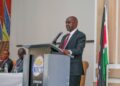
Speaking during the release of the 2026 Kenya Universities and Colleges Central Placement Service (KUCCPS) placement results on Wednesday, July 8, TSC representative Dr. Reuben Nthamburi said many of the learning areas introduced under CBE are new and were never part of traditional teacher-training programmes.
As a result, the country is experiencing an acute shortage of qualified teachers in several specialized subjects.
Among the most affected learning areas are:
- Building Construction
- Woodwork
- Media Work
- Marine and Fisheries
- Home Science
“Those subjects have the biggest challenge because they are new and were not there before,” Dr. Nthamburi said.
TSC Wants Universities to Align Teacher Training with CBE
Dr. Nthamburi called on universities to align their teacher education programmes with the Teacher Education Framework developed by TSC to ensure graduates possess the knowledge and practical skills required to teach under the competency-based education system.
“We are requesting universities to align themselves with the training of teachers in line with the Teacher Education Framework developed by the Commission for university alignment to competency-based education,” he said.
He added that universities should produce teachers who are fully prepared to deliver the new curriculum.
“We require universities to train teachers so that they graduate qualified and competency-based.”
According to the Commission, reviewing university curricula now will help bridge the teacher gap before more learners enter senior school.
Subjects Universities Have Been Asked to Introduce
To address the growing shortage, TSC has urged universities to introduce or strengthen training in the following specialized learning areas:
- Building Construction
- Woodwork
- Media Work
- Media Technology
- Marine and Fisheries
- Aviation
- Creative Arts
- Pre-Technical Studies
- Integrated Science
- Home Science
- Music and Dance
- Theatre and Film
- Sports and Recreation
The Commission believes expanding training in these subjects will ensure schools have enough qualified teachers to support the full implementation of Competency-Based Education across the country.
Call Comes as KUCCPS Releases 2026 Placement Results
TSC’s appeal came during the announcement of the 2026 KUCCPS placement results, which officially kicked off admissions into universities and other tertiary institutions.
Education Cabinet Secretary Julius Ogamba revealed that 980,535 candidates who sat the 2025 Kenya Certificate of Secondary Education (KCSE) examination were eligible to apply for placement.
Out of these, 270,508 candidates attained a mean grade of C+ and above, qualifying them for degree programmes.
The remaining candidates qualified for admission to national polytechnics, Technical and Vocational Education and Training (TVET) institutions, the Kenya Medical Training College (KMTC), teacher training colleges, Kenya Utalii College and other tertiary institutions.
KUCCPS reiterated that placement into institutions is based on merit, applicants’ KCSE performance, programme choices and the available capacity in each institution, as provided for under the Universities Act, 2012.
Universities Face Growing Pressure to Produce More CBE Teachers
With thousands of students now set to join universities, TSC says institutions have a unique opportunity to revise their teacher education programmes and begin producing graduates in specialized learning areas that are increasingly becoming essential under the Competency-Based Education system.
The move is expected to help address future staffing shortages and ensure schools have adequately trained teachers to deliver the new curriculum effectively.