The Education system in Kenya is undergoing major shifts under the Competency Based Education (CBE). One of major shift that we have witnessed lately is the transition of learners from Junior School (grade7-9) to Senior School (Grade 10-12) that has captured the attention of many parents and other stakehkeholders across the nation in the recent past.
The pioneer class completed their Junior School education Assessments last year and have now transtioned to senior school for grade 1o.
Unlike the 8-4-4 system that provided common subjects for learners, the Competency Based Education at senior school has offered learners with choices where they choose and specialize in learning areas that aligns with their career, talents and interests.
The Ministry of Education in collaboration with the Kenya National Examination Council (KNEC) and the Kenya Institute of Curriculum Development (KICD) has coordinated the placement of learners in their respective schools a process that received praises and criticism from stakeholders in equal measure.
Read more: Transition from Junior to Senior School In Kenya: What we Know So FarTransition from Junior to Senior School in Kenya
Basic Education Structure Under CBE
The competency based Education is organized into three levels as indicated in the table below;
| Level | grade | Purpose |
| Pre-Primary | PP1&PP2 | To lay strong foundation for child’s holistic development and future learning. |
| Primary | 1-6 | Foundational Skills |
| Junior School | 7-9 | Talent Exploration |
| Senior School | 10-12 | Career Specialization |
From the above structure its evident that Junior school allows learners to explore their interests while in senior school, learners are allowed to specialize in various pathways of their choice.
During placement of learners in grade ten, the ministry took into consideration regional balance in order to ensure fair distribution of learners across counties.
National Assessments for Junior and Senior school
Learners who have transitioned from grade 7 to 9, sit for their National Assessment known as Kenya Junior School Education Assessment dubbed as KJSEA. This assessment is administered by the Kenya National Examinations council.
This assessment plays a vital role of placing these learners into senior school and determines the pathway the learner will undertake while at senior school.
The Kenya National Examinations Council calculates the assessment weighting using the following method as shown in the table below;
| Assessment Type | Grade Offered | Percentage % |
| KJSEA | 9 | 60 |
| School Based Assessment (SBA) | 7&8 | 40 |
Therefore, the overall score for candidates is arrived at using the above procedure where the main assessment forms 60% of the final score while the school based assessments form 40% of the final score totalling to 100%.
The school based assessments that form the 40% are projects, practical work and other written assessments done in schoool.
Career Pathways at Senior school
At senior school, we saw that learners focus their career pathways. At senior school, there are three major pathways that learners are supposed to choose from which include STEM, Social Science and Arts and Sports.
STEM PATHWAY
In STEM, learners focus on Science, Technology, Engineering and Mathematics. Learner in this pathway prepare for careers like engineering, medicine, scientific research, computer science, software development, pilot and aviation, data science and architecture.
Under this pathway, learners take five compulsory learning areas which include;
- Mathematics
- English
- Kiswahili/Kenya Sign Language
- Comunity service learning
- Physical Education
There are various specialized learning areas that learners under this pathway undertake which include;
Pure Science
Under this specialized science area, learners take learning areas like Physics, Chemistry and Biology.
Applied Science/ICT
Learners under this area take subjects like computer science, engineering technology, Biotechnology and environmental science.
From above, learners in STEM pathway will spend much of their time studying science subjects , conducting experiments, building tecnology and solving real world problems through mathematics and science.
SOCIAL SCIENCE PATHWAY
This pathway is best suited for learners with interest in studying human behavior, society, operation of economies and people interactions.
Learners under this pathway take five compulsory learning areas whci include;
- Mathematics
- English
- Kiswahili/Kenya Sign Language
- Comunity service learning
- Physical Education
Social science specializes in various areas which include;
Humanities
Here learners study history, geography and Religious education.
Business and Economics
Here they study Business studies, economics and accounting
Communication and media
Here they study Journalism, media studies and Language.
Learners in this pathway will generally conduct research on social matters, study governance and leadership systems, analyse economic trends and businesses and work on community projects.
Possible career paths under this pathway include;
- Lawyer
- Teacher
- Journalist
- Economist
- Diplomat
- Politician
- Business manager
- Public Administrator
ARTS AND SPORTS SCIENCE
This pathway is designed for learners who have interests in creative arts, performing arts and sports. This pathway involves talent development, creative thinking and physical fitness in the process of learning.
Learners in this pathway take common compulsory subjects which include;
- Mathematics
- English
- Kiswahili/Kenya Sign Language
- Comunity service learning
- Physical Education
Learners under this pathway have three specialized areas that they choose from which include;
Creative ARTS
Here they take fine arts, music, dance and theatre and film.
Sports Science
Here they study sports performance, coaching and training, sports nutrition and sports psychology.
Media and Creative Production
Learners taking this area study film production, photography and digital media.
Learners taking this pathway can join the following career paths;
- Professional athlete
- musician
- Actor or Actress
- Sports coach
- Film producer or director
- Artist or designer
- Fitness trainer
- Sports journalist
How Learners Select schools and pathways at senior School
Before candidates in grade 9 sit for their KJSEA, the Ministry of Education opens an online system where learners are required to choose senior school and their preferred pathways. Every learner is required to select a primary pathway and an alternate pathway.
When selecting schools, learners are required to choose 12 schools where the fist seven schools are aligned with the first pathway, 3 schools for the second pathway and two schools for the third pathway.
Out of the 12 schools selected, 9 schools must be boarding schools while 3 schools must be day schools within the learner’s home county.
Factors affecting Pathway Placement
Placement of learners in senior school depends on a number of factors which include;
- Academic Performance where school based assessments and KJSEA play a vital role in this placement.
- Interests of learners where they are provided with questionnaires and career guidance activities which they respond to that form a foundation for future placements.
- School capacity where the ministry has to check the available facilities,available teachers and infrastructure before placing learners.
- Equity and regional balance where the system in place checks to ensure there is fair distribution of learners across all counties.
- Categories of senior school where we have those in C1 which comprises of National schools, C2 for extra county schools, C3 for county schools and C4 for subcounty schools. C1 and C2 schools offer all the three pathways while C3 and C4 schools offer dual pathways.
Challenges associated with CBE Transition
- Inadequate facilities like laboratories that will support STEM subjets.
- Shortage of teachers to handle new learning areas that have been introduced.
- Lack of proper career guidance for learners as many may struggle to make choices since they are young.
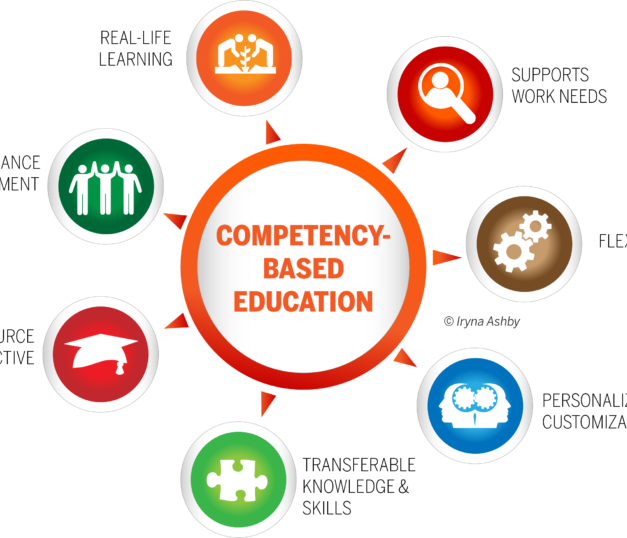
Transition from junior school to senior school marks a major milestone in the Kenya Education system since the advent of the new education system dubbed CBE. If this curriculum is properly implemented, it will bring remarkable changes in the education system that will allow learners to develop skills and careers that match their interests and abilities.
Transition from Junior to Senior School in Kenya