
Global Trends in Education
There are three major trends that have revolutionized education in the world. These trends have led to rapid changes orchestrated by technology, globalization and changing workforce needs. The three trends include Artificial Intelligence AI in education, Digital Learning and Student mobility.
These trends have affected the delivery, access and utilization of knowledge globally.
This article will highlight key insights that are crucial to teachers, students and education policy makers in understanding future learning.
1. Artificial Intelligence in Education
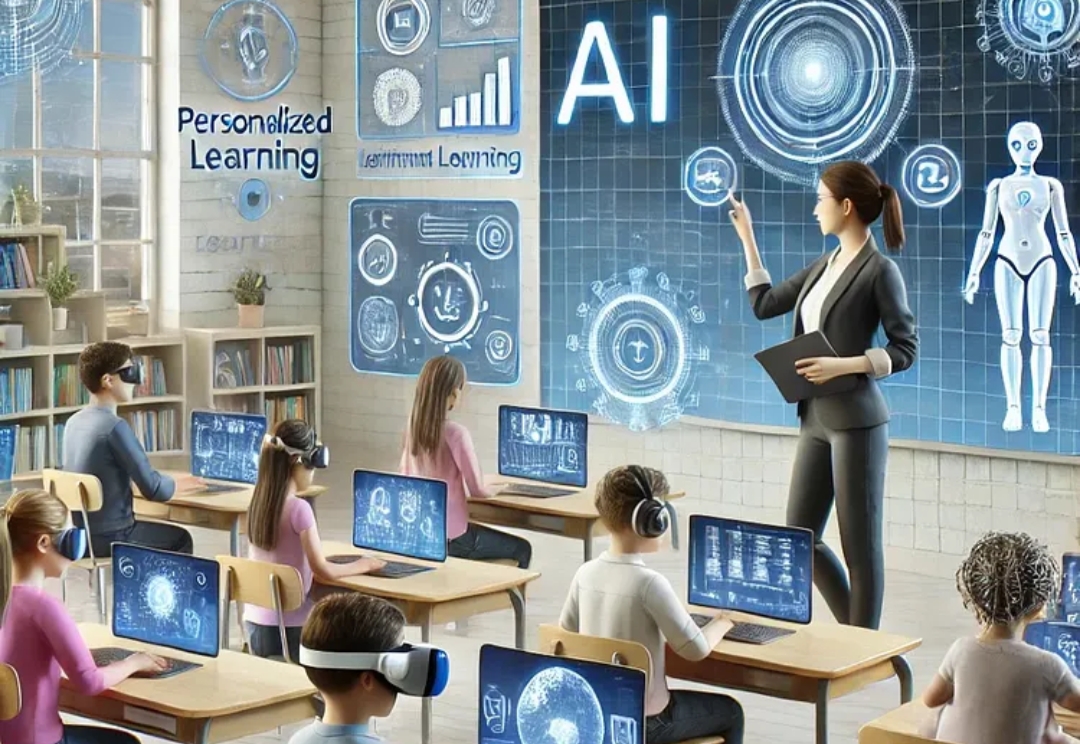
Artificial intelligence has caused very great impacts in the education landscape today. It has transformed teaching, assessment, learning and administration.
How has AI Transformed Education in the world?
i) Personalized Learning
Artificial intelligence has enabled adaptive learning where the AI Systems tailor content to individual students depending on their ability, interests, learning pace, strengths and weaknesses.
This has enhanced learner centred approach which is a shift from the old one-size-fits-all model.
Artificial Intelligence, AI has show the ability to analyze student performance and give feedback in real time with proper recommendations. It has been of great help to learners struggling in class to catch up with others.
Since its inception , AI has provide to enhance critical thinking skills that encompasses problem solving and independent learning.
ii) Automation of Teaching Tasks
Artificial intelligence has automated routine tasks like grading of assignments, attendance tracking and even managing administration work. Due to this automation, teachers now have more time to focus on mentorship, Creativity and student engagement.
iii) Teaching Assistant
Due to the rise in the number of Artificial Intelligence tools globally like Chatbots and tutors, teachers now don’t strain disseminating content and answering questions.
These AI tools are capable of answering student questions in real time, providing 24/7 learning assistance and stimulating real world problem solving skills.
A number of governments in the world are embracing these AI tools and integrating it in the National Education systems. Countries like China and Estonia are live examples of how serious governments are in revolutionizing education sector through artificial intelligence.
What are the Challenges of AI in Education?
As much as AI is transforming the Education sector across the globe, it also comes with its own shortcomings that needs to be addressed by education stakeholders. Some of the challenge of AI include:
Data Privacy Risks
Since AI heavily relies on student data such as personal information, academic performance and learning behavior, these data collected by AI tools can violated by individuals with malicious intentions. Some people may misuse this student data which is a breach of data protection act.
Therefore, this calls for ethical AI use in teaching and learning to ensure students’ data is protected.
Digital Divide and Inequality
Since students come from different backgrounds, they don’t have equal access to digital devices and internet connectivity that can facilitate learning.
Due to this disparity, there exists a widening gap between students with maximum access and those with little to no access. Therefore, these students won’t be competing fairly due to this discrepancy.
High Cost of Implementation
Setting up AI education in Kenya requires capital intensive systems like AI infrastructure, training teachers on its use and maintaining the systems. Therefore many schools will struggle to meet these costs due to low funding from the government.
Over-reliance
Since the inception of AI tools like chatgpt, many students rely heavily on them for answers without taking time to reason first. This has reduced critical thinking and creativity among students.
These tools should be designed in such a way that it supports learning but not replacing human ability to think.
Academic Integrity and Cheating
Many institutions have show rising cases of cheating in exams something that has compromised examination integrity.
Some students use these tools to complete their school tasks without straining or doing research hence bypassing learning which is fundamental in the education system.
This has made it difficult for teachers to assess learners who have fully understood in class therefore bringing unfairness among learners.
Global Trends in Education
2. Digital Learning
During COVID-19, the government ordered people to stay at home to reduce the rate of spreading the virus. As a result of this, schools were ordered to close down until the crisis is over.
Due to a ban put of physical gathering, many schools resorted to digital learning where they conducted teaching and learning via the internet using digital learning platforms like zoom and Google meet.
Ever since, the digital learning has expanded and revolutionized greatly. There are many digital learning platforms that have evolved and have changed the education ecosystem affecting teaching and learning. Some of these platforms include:
a) EdTech
This digital platform has greatly impacted many students globally with managers investing greatly in the platform to support the growing number of students who want to you it.
Some f the tools that have been designed to aid in learning include:
- Virtual classrooms
- Mobile learning apps like zoom
- Learning Management System
- Gamified platforms
Online and Hybrid Learning Models
Nowadays, universities across the globe offer online degrees to students from all parts of the world. Some blend the online and physical lecture method which has allowed may people to aquire degrees from the comfort of their houses.
Universities like Arizona and MIT have embrace the online classes where they have incorporated AI in teaching.
3. Global Student Mobility
Global student mobility has facilitated movement of students from one country to another in search of education. This has increased the demand for global education where students study abroad, enroll in international universities and even taking courses from global institutions.
This has facilitated better career opportunities, access to quality education and global exposure where students get to learn new cultures in other countries.
There is also a rise in virtual mobility where students can learn from international universities without necessarily having to physically move to those countries. Students through this program attain their online international degrees enhancing cross-border learning.
Global Trends in Education
Conclusion
Artificial Intelligence, Digital Learning platforms and student mobility has shaped the education sectors in the globe. These evolving new trends in education have greatly influenced access to quality education but they have there shortcomings that require careful consideration to ensure fairness among students.
Schools now need to incorporate technology in teaching and learning by embracing innovation which will prepare learners for what lies ahead of them. Schools should ensure that noe of the learners are left behind with the new inventions and innovations.
Global Trends in Education